
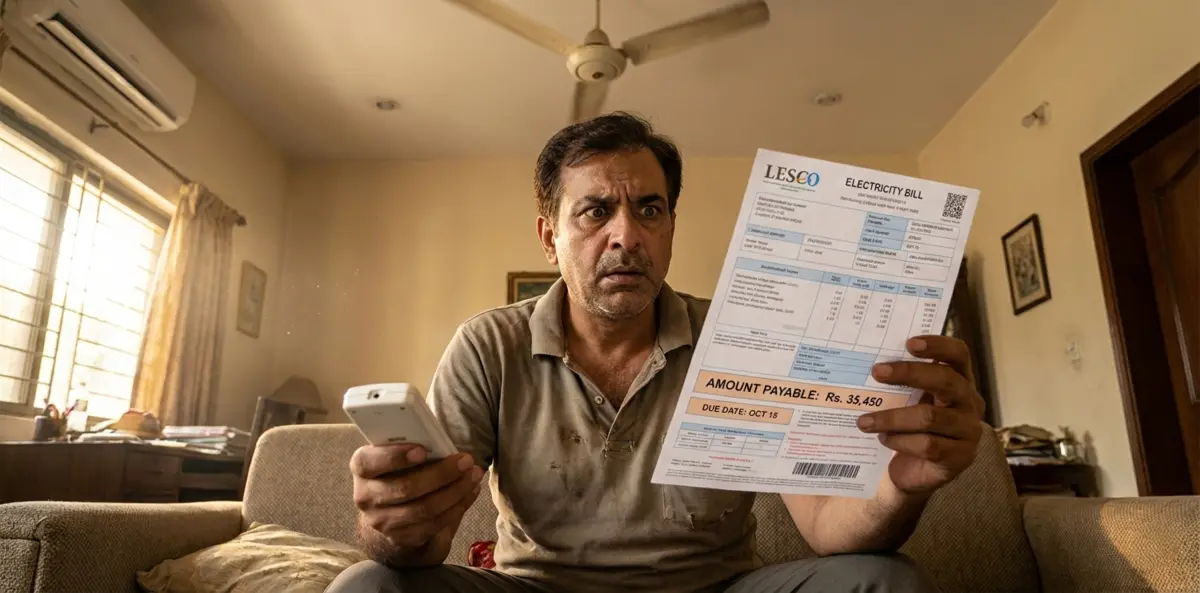
Pakistan’s summer months bring scorching temperatures often exceeding 45°C, leading to a dramatic spike in electricity consumption as households rely heavily on air conditioning, fans, and refrigeration. For most Pakistani families, reduce electricity bills in summer can double or even triple compared to winter months, creating significant financial strain. With electricity tariffs continuously rising and peak hour charges making bills even more expensive, finding effective ways to reduce electricity consumption has become essential.
This comprehensive guide presents the top 10 proven strategies to substantially reduce your electricity bill during Pakistan’s brutal summer season. These practical, data-backed methods can help you save 30-50% on your monthly electricity costs while maintaining comfortable living conditions. We will also show you how to track your savings progress using eBillPakistan to monitor your consumption across LESCO, IESCO, K-Electric, MEPCO, FESCO, and other distribution companies.

Understanding Your Summer Electricity Bill in Pakistan
Before implementing cost-reduction strategies, it is important to understand what drives your summer electricity consumption and how Pakistani electricity billing works during peak summer months.
Typical Summer Electricity Consumption Breakdown in Pakistani Households:
- Air Conditioning: 60-70% of total consumption
- Refrigerator/Freezer: 10-15% of total consumption
- Fans (ceiling and pedestal): 8-12% of total consumption
- Water Pumps: 5-8% of total consumption
- Lighting: 3-5% of total consumption
- Other Appliances: 5-10% of total consumption
You can check your current monthly consumption patterns by visiting eBillPakistan and entering your consumer reference number for LESCO, IESCO, K-Electric, MEPCO, FESCO, GEPCO, PESCO, HESCO, SEPCO, or QESCO. Comparing your bills month-over-month helps identify when consumption spikes occur and measure the effectiveness of reduction strategies.
1. Optimize Your Air Conditioning Usage and Settings
Since air conditioning represents the largest portion of summer electricity consumption in Pakistan, optimizing AC usage delivers the most significant bill reductions.
Effective AC Optimization Strategies:
- Set temperature to 24-26°C instead of 16-18°C: Each degree lower increases electricity consumption by 6-8%. Setting your AC to 24°C instead of 18°C can reduce AC-related costs by 30-40%
- Use timer functions strategically: Set your AC to turn off 30 minutes before you wake up or leave the room, as the residual cooling will keep the room comfortable
- Enable sleep mode at night: Sleep mode gradually increases temperature as you sleep deeper, reducing consumption by 15-25% overnight
- Service your AC before summer: Clean filters, check refrigerant levels, and clean coils to maintain peak efficiency. A poorly maintained AC can consume 20-30% more electricity
- Close all doors and windows: Even small gaps waste cooled air and force your AC to work harder
- Use AC only in occupied rooms: Avoid cooling empty spaces; close vents in unused rooms if you have central air
- Consider upgrading to inverter AC: If your AC is over 10 years old, replacing it with an inverter model can reduce AC-related consumption by 30-40%
| AC Temperature Setting | Comfort Level | Monthly Cost (1.5 Ton, 10 hrs/day) | Monthly Savings vs 18°C |
|---|---|---|---|
| 18°C | Very Cold | PKR 16,500 | — |
| 22°C | Comfortable | PKR 13,200 | PKR 3,300 (20%) |
| 24°C | Comfortable | PKR 11,500 | PKR 5,000 (30%) |
| 26°C | Moderate | PKR 9,900 | PKR 6,600 (40%) |
“The single most effective action Pakistani households can take is simply raising their AC thermostat from 18°C to 24°C. This one change alone can reduce summer electricity bills by 25-35% while maintaining perfectly comfortable indoor temperatures.”
2. Improve Your Home’s Insulation and Heat Management
Better insulation reduces the cooling load on your air conditioning system, allowing it to work less and consume less electricity while maintaining the same comfort level.
Cost-Effective Insulation Improvements:
- Install thermal or blackout curtains: Block direct sunlight during peak afternoon hours (12 PM – 4 PM) to reduce indoor temperature by 3-5°C
- Apply reflective window film: Blocks up to 80% of solar heat while allowing natural light, reducing AC load by 15-20%
- Seal gaps around doors and windows: Use weather stripping or door sweeps to prevent cool air leakage
- Paint exterior walls with heat-reflective paint: Light colors reflect heat; dark colors absorb it, increasing cooling requirements
- Insulate your roof or ceiling: Roof insulation can reduce indoor temperature by 5-8°C, dramatically lowering AC usage needs
- Plant trees or install shade structures: Natural shading on west and south-facing walls reduces heat absorption
- Use exhaust fans in kitchen and bathrooms: Remove hot air and moisture quickly rather than letting it spread throughout the home
Expected Savings from Insulation Improvements: 15-25% reduction in cooling-related electricity consumption
3. Leverage Peak and Off-Peak Hour Pricing
Pakistan’s electricity distribution companies charge different rates based on time of use. Understanding and utilizing this pricing structure can significantly reduce your electricity costs.
| Time Period | Hours (Summer) | Typical Rate | Strategy |
|---|---|---|---|
| Peak Hours | 7:00 PM – 11:00 PM | PKR 18-24/unit | Minimize usage during this period |
| Off-Peak Hours | 11:00 PM – 7:00 AM | PKR 8-12/unit | Schedule high-consumption activities here |
| Standard Hours | 7:00 AM – 7:00 PM | PKR 14-18/unit | Normal consumption acceptable |
How to Shift Consumption to Off-Peak Hours:
- Run washing machines and dishwashers after 11:00 PM
- Charge electric vehicle, power banks, and rechargeable devices overnight
- Use water heaters during off-peak hours and rely on stored hot water during peak times
- Iron clothes after 11:00 PM or before 7:00 AM
- Pre-cool your home before peak hours begin, then reduce AC usage during 7-11 PM
- Schedule heavy kitchen appliance usage (oven, microwave, mixer) outside peak hours
Expected Savings: 20-30% reduction in overall electricity costs by avoiding peak hour consumption
4. Use Ceiling Fans Strategically with Air Conditioning
Ceiling fans consume only 75-100 watts compared to 1,500-2,000 watts for a typical air conditioner. Using fans strategically allows you to reduce AC dependency while maintaining comfort.
Effective Fan Usage Strategies:
- Run fans with AC at higher temperature: Set AC to 26°C instead of 22°C and use ceiling fans to circulate cool air, achieving the same comfort while reducing AC consumption by 25-30%
- Use fans alone during moderate weather: When outdoor temperature is below 35°C, fans alone may provide sufficient comfort without AC
- Turn off fans in unoccupied rooms: Fans cool people, not rooms; they waste electricity when no one benefits from the airflow
- Maintain fan efficiency: Clean fan blades monthly and lubricate motors annually to maintain optimal airflow
- Install energy-efficient BLDC fans: Brushless DC motor fans consume 50-60% less electricity than conventional fans while providing better airflow
| Cooling Method | Power Consumption | Cost per Hour (PKR 20/unit) | Best Use Case |
|---|---|---|---|
| 1.5 Ton AC alone at 22°C | 1,800 watts | PKR 36 | Extreme heat (40°C+) |
| 1.5 Ton AC at 26°C + Fan | 1,200 watts | PKR 24 | Hot weather (35-40°C) |
| Ceiling Fan only | 75 watts | PKR 1.50 | Moderate weather (30-35°C) |
Expected Savings: 15-25% reduction in cooling-related electricity costs
5. Optimize Refrigerator and Freezer Efficiency
Refrigerators run 24 hours daily, making them significant electricity consumers. Small efficiency improvements create substantial cumulative savings over summer months.
Refrigerator Optimization Techniques:
- Set appropriate temperature: Refrigerator should be 3-4°C and freezer -18°C; colder settings waste electricity without benefit
- Keep refrigerator away from heat sources: Position away from stoves, ovens, and direct sunlight; even 1-2°C ambient temperature increase raises consumption by 5-10%
- Maintain door seals: Check rubber gaskets for cracks or gaps; poor seals allow cold air to escape, forcing the compressor to work harder
- Avoid overfilling or underfilling: Three-quarters full is optimal; overfilling blocks airflow while underfilling provides insufficient thermal mass
- Cover liquids and food: Uncovered food releases moisture, forcing the refrigerator to work harder to remove humidity
- Defrost regularly if not frost-free: Ice buildup over 6mm thick reduces efficiency by 30-40%
- Clean condenser coils annually: Dust buildup on rear coils can increase consumption by 15-20%
- Let hot food cool before refrigerating: Placing hot items inside forces the refrigerator to work significantly harder
Expected Savings: 10-20% reduction in refrigerator-related electricity consumption
6. Switch to Energy-Efficient LED Lighting
While lighting accounts for only 3-5% of summer electricity consumption, switching to LED bulbs is one of the easiest and most cost-effective upgrades with immediate returns.
| Bulb Type | Wattage for Same Light | Lifespan (Hours) | Cost per 10,000 Hours |
|---|---|---|---|
| Incandescent | 60 watts | 1,000 | PKR 12,000 |
| CFL (Energy Saver) | 15 watts | 8,000 | PKR 3,000 |
| LED | 9 watts | 25,000 | PKR 1,800 |
LED Lighting Benefits:
- 85% less electricity consumption than incandescent bulbs
- 40% less consumption than CFL energy savers
- Produce minimal heat, reducing cooling load in air-conditioned spaces
- Last 15-25 times longer than incandescent bulbs
- Payback period of 3-6 months in Pakistani electricity pricing
Expected Savings: 50-70% reduction in lighting-related electricity costs; overall bill reduction of 2-4%
7. Manage Water Heating and Pump Usage Efficiently
Water heaters and pumps are often overlooked electricity consumers that can be optimized for significant savings during summer months when hot water needs decrease.
Water Heating Optimization for Summer:
- Reduce or eliminate electric water heater usage: In summer, solar heating or ambient temperature water is often sufficient for bathing
- Lower water heater temperature setting: If hot water is needed, reduce temperature from 60-70°C to 45-50°C
- Use timer switches on geysers: Heat water only when needed rather than maintaining temperature 24/7
- Fix leaking hot water taps immediately: Dripping hot water wastes both water and the electricity used to heat it
- Insulate water heater tanks and pipes: Reduces standby heat loss by 25-40%
Water Pump Efficiency Tips:
- Run water pumps during off-peak hours (11 PM – 7 AM) to benefit from lower electricity rates
- Fill overhead tanks during off-peak hours and rely on gravity feed during peak hours
- Fix all water leaks to avoid unnecessary pump cycles
- Clean pump filters regularly to maintain optimal flow and reduce running time
- Size pumps appropriately for your needs; oversized pumps waste electricity
Expected Savings: 30-50% reduction in water heating costs; 15-25% reduction in pump-related costs
8. Implement Smart Power Management Practices
Many appliances consume electricity even when switched off, a phenomenon called phantom load or standby power. Managing this waste prevents unnecessary consumption.
Effective Power Management Strategies:
- Unplug chargers when not actively charging: Phone, laptop, and device chargers draw power continuously when plugged in
- Use power strips with switches: Turn off entire groups of devices (TV, set-top box, gaming console, sound system) with one switch
- Unplug small appliances when not in use: Microwaves, coffee makers, and toasters draw standby power
- Disable instant-on features: TVs and other electronics in standby mode consume 5-15 watts continuously
- Charge devices to 100% then unplug: Trickle charging after reaching full capacity wastes electricity
- Use laptop on battery power: Charge overnight during off-peak hours, then use battery during peak hours
Common Phantom Load Sources in Pakistani Homes:
| Device | Standby Power | Annual Waste (24/7 plugged) |
|---|---|---|
| LED TV in standby | 8-12 watts | 70-105 kWh (PKR 1,400-2,100) |
| Cable/DTH set-top box | 15-20 watts | 130-175 kWh (PKR 2,600-3,500) |
| Desktop computer (sleep) | 5-10 watts | 45-90 kWh (PKR 900-1,800) |
| Microwave (clock display) | 3-5 watts | 25-45 kWh (PKR 500-900) |
| Phone charger (plugged) | 0.3-0.5 watts | 3-5 kWh (PKR 60-100) |
Expected Savings: 5-10% reduction in overall electricity consumption by eliminating phantom loads
9. Upgrade to Energy-Efficient Appliances
While requiring upfront investment, replacing old inefficient appliances with modern energy-efficient models provides long-term savings that recover the initial cost within 1-3 years.
Priority Appliances for Replacement:
- Air Conditioners over 10 years old: Modern inverter ACs use 30-50% less electricity; payback period is 18-30 months with heavy summer usage
- Refrigerators over 15 years old: New models consume 40-60% less electricity; payback period is 3-5 years
- Conventional ceiling fans: BLDC fans use 50-60% less electricity; payback period is 2-3 years
- Incandescent and CFL bulbs: LED bulbs pay for themselves in 3-6 months of usage
- Old water heaters: Modern insulated models with timers reduce consumption by 25-40%
“When purchasing new appliances in Pakistan, always check the Energy Efficiency Rating label. A 5-star rated appliance may cost 20-30% more initially but will save 40-60% on electricity over its lifetime, providing substantial net savings.”
Expected Savings: 25-40% reduction in appliance-specific consumption; 15-25% reduction in overall household electricity bill
10. Monitor and Track Your Consumption with eBillPakistan
You cannot manage what you do not measure. Regularly monitoring your electricity consumption helps identify savings opportunities and verifies the effectiveness of reduction strategies.
Key Metrics to Track:
- Total monthly units consumed (kWh)
- Month-over-month percentage change
- Year-over-year comparison (June 2024 vs June 2025)
- Cost per unit (to identify rate increases vs consumption increases)
- Peak hour vs off-peak hour consumption if separately metered
“Households that actively monitor their electricity consumption through regular bill checking on platforms like eBillPakistan reduce their usage by an average of 12-18% simply through increased awareness and behavioral changes, even without major infrastructure investments.”
Combined Impact: How Much Can You Actually Save?
Implementing multiple strategies simultaneously creates compounding savings that can dramatically reduce your summer electricity bills in Pakistan.
| Strategies Implemented | Expected Combined Savings | Typical Monthly Reduction |
|---|---|---|
| 1-2 strategies (basic) | 15-20% | PKR 2,500 – 4,000 |
| 3-5 strategies (moderate) | 25-35% | PKR 5,000 – 7,000 |
| 6-8 strategies (comprehensive) | 35-45% | PKR 7,000 – 9,000 |
| All 10 strategies (maximum) | 45-55% | PKR 9,000 – 11,000 |
Example Household Transformation:
A typical middle-class household in Lahore with average summer consumption of 1,000 units (PKR 20,000/month) implementing 7 out of 10 strategies:
- Before: 1,000 units, PKR 20,000/month
- After: 620 units, PKR 12,400/month
- Monthly Savings: PKR 7,600 (38% reduction)
- Summer Season Savings (5 months): PKR 38,000
- Annual Savings: PKR 55,000 – 60,000
Quick Action Plan: Start Saving Today
Not all strategies require significant investment or effort. Here is a prioritized action plan based on ease of implementation and immediate impact.
Immediate Actions (Today – This Week):
- Raise AC temperature from 18-20°C to 24-26°C
- Turn off all standby appliances and unplug unused chargers
- Switch to off-peak hours for laundry, ironing, and water heating
- Close curtains during afternoon peak sunlight hours
- Check and clean AC filters
- Turn off fans in unoccupied rooms
- Check your current bill on eBillPakistan to establish baseline
Short-Term Actions (This Month):
- Replace all incandescent and CFL bulbs with LEDs
- Service your air conditioner professionally
- Install weather stripping on doors and windows
- Purchase and install thermal curtains for south and west-facing windows
- Set up power strips for easy device management
- Check refrigerator door seals and temperature settings
Long-Term Investments (Next 3-6 Months):
- Consider replacing AC if over 10 years old with inverter model
- Apply reflective window film or tinting
- Install ceiling insulation or heat-reflective roof coating
- Replace old ceiling fans with BLDC energy-efficient models
- Upgrade old refrigerator if over 15 years old
Conclusion
Reducing your electricity bill during Pakistan’s brutal summer months is not only possible but achievable through a combination of behavioral changes, operational optimizations, and strategic investments in energy efficiency. The ten strategies outlined in this guide have been proven effective in thousands of Pakistani households and can reduce your summer electricity costs by 30-50% when implemented comprehensively.
The key to success is starting immediately with easy, no-cost changes like adjusting AC temperature settings and shifting consumption to off-peak hours, then gradually implementing more comprehensive improvements like insulation upgrades and appliance replacements. Track your progress monthly using eBillPakistan to verify savings and maintain motivation as you see your electricity units and costs decline month after month.
Remember that every unit of electricity saved not only reduces your bill but also decreases strain on Pakistan’s electrical grid, reduces load shedding risks, and contributes to environmental sustainability. With electricity tariffs continuing to rise, investing time and resources into efficiency improvements today will provide compounding returns for years to come.
Start today by checking your current consumption on eBillPakistan, implementing 3-5 strategies from this guide, and tracking your next month’s bill to measure your success. Your future self—and your wallet—will thank you.

Farhan Shafique is a Pakistan-based researcher and content writer specializing in electricity billing systems and public utility services. He has spent years studying billing structures, tariff calculations, and consumer rights to help people better understand their monthly bills. Through detailed guides and step-by-step explanations, he aims to simplify complex utility processes for everyday users.