
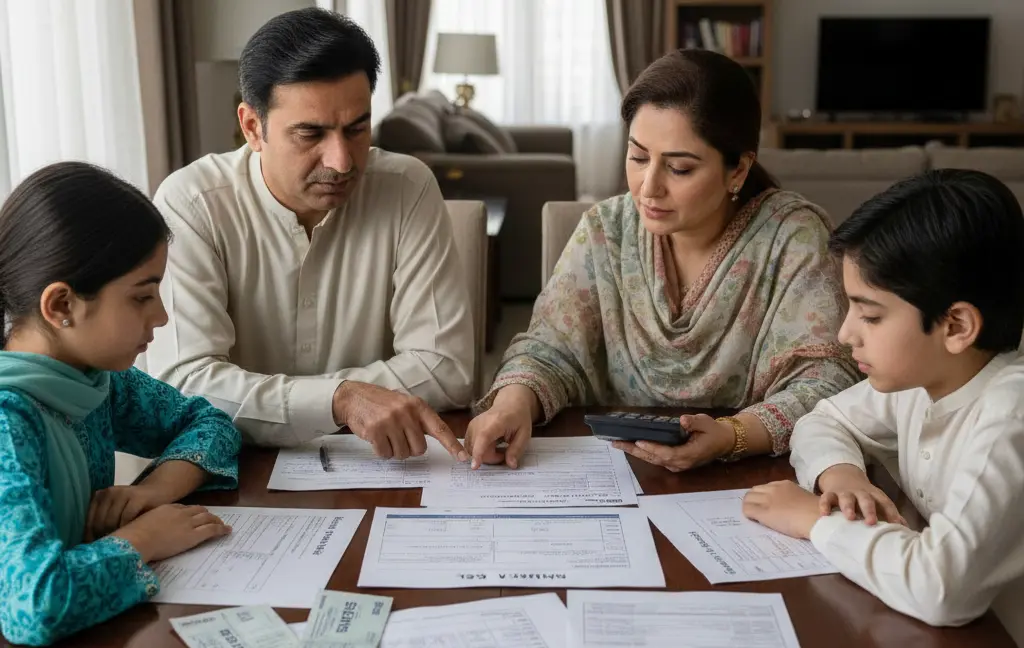
Getting a new gas connection from SNGPL (Sui Northern Gas Pipelines Limited) in 2026 is different from what it used to be. The biggest change? You now have to choose between natural gas and RLNG (Re-gasified Liquefied Natural Gas) connections, and this choice affects everything from your monthly bill to how you use gas at home.
Most people applying for SNGPL connections in Punjab and KPK are confused about which option to pick. Natural gas sounds better because it’s “natural,” but RLNG might actually be more practical for your situation. Let’s break down everything you need to know before filling out that application form.

What’s Actually Changed in 2026
SNGPL stopped giving out new natural gas connections to residential consumers in most areas back in 2023. Pakistan’s natural gas reserves are running low, and the existing supply barely covers current consumers. So if you’re applying fresh in 2026, you’re most likely getting an RLNG connection unless you’re in a very specific zone where natural gas is still available.
Here’s what that means practically: RLNG comes from imported liquefied natural gas that arrives at Pakistani ports, gets converted back to gas form, and then flows through the same pipelines. You can’t tell the difference when you’re cooking or heating water, but your bill definitely looks different.
Natural Gas vs RLNG: What’s the Real Difference
Both burn the same way in your stove or heater, but they’re not the same thing economically or practically.
| Aspect | Natural Gas | RLNG |
|---|---|---|
| Source | Domestic gas fields (Sui, Qadirpur) | Imported LNG converted to gas |
| Price per MMBTU | PKR 800-1,200 | PKR 1,800-2,500 |
| Availability for New Connections | Very limited, mostly closed | Available in most areas |
| Supply Reliability | Subject to load management in winter | Generally more consistent |
| Monthly Bill (typical 3-person household) | PKR 2,500-4,000 | PKR 4,500-7,000 |
| Connection Fee | PKR 20,000-35,000 | PKR 25,000-40,000 |
The numbers tell the story clearly: RLNG costs about 70-90% more than natural gas for the same usage. A household that would pay PKR 3,000 on natural gas will pay around PKR 5,500 on RLNG for identical consumption.
“We’ve seen families shocked when their first RLNG bill arrives. They cooked the same amount, used the same heater, but the bill doubled compared to what their neighbor with an old natural gas connection pays. That’s just the reality of imported gas pricing.” — SNGPL Customer Service Officer, Lahore
Who Can Actually Get Natural Gas Connection in 2026
Natural gas connections aren’t completely shut down, but SNGPL only approves them in very specific situations:
- Areas with existing natural gas infrastructure and available capacity: Some old housing societies where the pipeline has extra capacity
- Properties in low-pressure zones marked for natural gas: SNGPL publishes a list of zones; check if your area qualifies
- Government priority areas: Certain strategic locations still get natural gas
- Conversion from RLNG to natural gas: In rare cases, existing RLNG consumers can switch if natural gas becomes available in their zone
For everyone else, which is about 90% of new applicants, RLNG is your only option. Don’t waste time trying to get natural gas if your area isn’t on the approved list—SNGPL will just reject your application and you’ll have to reapply for RLNG anyway.
How to Apply for SNGPL New Connection in 2026
The application process is mostly the same whether you’re getting natural gas or RLNG, but you need to specify which one you’re applying for.
Documents You Need
- Original and photocopy of property ownership documents (Fard, registry, allotment letter)
- CNIC copy of the applicant (property owner or authorized tenant)
- Copy of latest electricity bill (LESCO, IESCO, GEPCO, FESCO, or PESCO depending on location)
- Property tax receipt or proof
- Site plan showing property location
- Two passport-size photographs
- NOC from landlord if you’re a tenant
- Affidavit declaring no previous SNGPL connection exists at the property

Step-by-Step Application Process
- Visit SNGPL office or website: Go to sngpl.com.pk and look for new connection application. You can also visit your nearest SNGPL regional office
- Fill the application form: Choose between natural gas and RLNG when the form asks. Most forms now default to RLNG
- Submit documents: Attach all required documents. Missing even one will delay your application by weeks
- Pay processing fee: Usually PKR 3,000-5,000 depending on connection type
- Get acknowledgment receipt: They’ll give you an application number. Keep this safe
- Wait for site inspection: SNGPL sends someone to verify your property and check feasibility. This takes 10-15 days
- Receive connection charges estimate: After inspection, they’ll tell you the total cost based on distance from the main pipeline
- Pay connection charges: This is the big payment—anywhere from PKR 20,000 to PKR 100,000+ depending on your situation
- Installation: SNGPL installs the meter and connects you to the pipeline
- First bill: Your first gas bill arrives about 30-45 days after installation
Connection Charges: What You’ll Actually Pay
Connection charges vary wildly based on how far you are from the nearest gas pipeline and what infrastructure needs to be built.
| Scenario | Typical Cost Range |
|---|---|
| Property within 30 meters of existing pipeline | PKR 20,000 – 35,000 |
| Property 30-100 meters from pipeline | PKR 35,000 – 60,000 |
| Property 100-300 meters from pipeline | PKR 60,000 – 150,000 |
| New housing society requiring main line extension | PKR 200,000 – 500,000 (shared among residents) |
| Commercial connection | PKR 50,000 – 200,000 |
RLNG connections typically cost PKR 5,000-10,000 more than natural gas connections because the metering equipment is slightly different. But if you’re 200 meters from the pipeline, that extra few thousand won’t matter much compared to the line extension cost.
Monthly Bill: What to Expect
Once you’re connected, the bills start coming. Here’s roughly what different households pay based on actual consumption patterns from SNGPL billing data.
Natural Gas Monthly Bills
| Household Size | Typical Monthly Usage | Average Monthly Bill |
|---|---|---|
| Small (2-3 people, cooking only) | 15-25 cubic meters | PKR 1,800 – 3,000 |
| Medium (4-5 people, cooking + occasional heater) | 30-50 cubic meters | PKR 3,500 – 5,500 |
| Large (6+ people, cooking + regular heating) | 60-100 cubic meters | PKR 6,000 – 10,000 |
RLNG Monthly Bills
| Household Size | Typical Monthly Usage | Average Monthly Bill |
|---|---|---|
| Small (2-3 people, cooking only) | 15-25 cubic meters | PKR 3,200 – 5,000 |
| Medium (4-5 people, cooking + occasional heater) | 30-50 cubic meters | PKR 6,000 – 9,500 |
| Large (6+ people, cooking + regular heating) | 60-100 cubic meters | PKR 11,000 – 18,000 |

Winter months (November to February) see bills spike by 40-60% when people use gas heaters. A household paying PKR 4,000 in summer might see PKR 7,000-8,000 bills in January.
“The first winter after getting RLNG connection, families often go into shock. They’re used to natural gas prices where running a heater all evening was affordable. With RLNG, the same usage can push your bill over PKR 15,000 easily.”
Protected vs Non-Protected Category
This matters a lot for your bill, but most people don’t understand it until they see their first statement. SNGPL divides residential consumers into protected and non-protected categories based on monthly consumption.
Protected Category:
- Monthly consumption up to 0.5 MMBTU (roughly 15 cubic meters)
- Lower per-unit rates with government subsidy
- Natural gas: Around PKR 1,000-1,500 for this slab
- RLNG: Around PKR 1,800-2,500 for this slab
Non-Protected Category:
- Monthly consumption above 0.5 MMBTU
- Higher per-unit rates with no subsidy
- Natural gas: Rates increase significantly in higher slabs
- RLNG: Can be 2-3x more expensive than protected rates
Once you cross that 0.5 MMBTU threshold, your entire bill gets calculated at non-protected rates, not just the excess. So if you use 0.6 MMBTU, you don’t pay protected rate for 0.5 and higher rate for 0.1—you pay the higher rate for all 0.6.
Should You Get RLNG or Wait for Natural Gas
This depends entirely on your situation. Let’s break down different scenarios:
Get RLNG now if:
- Your area isn’t on SNGPL’s natural gas availability list
- You need gas connection urgently (new house, tired of gas cylinders)
- You can afford PKR 5,000-8,000 monthly gas bills
- Your property value increases with gas connection (rental or resale)
- You only use gas for cooking and occasional water heating
Consider waiting for natural gas if:
- SNGPL officially announced plans to expand natural gas in your area
- You can manage with gas cylinders for 6-12 more months
- Your budget is tight and RLNG bills would strain finances
- You use heavy gas appliances (heaters, geysers) regularly
Real talk: most people waiting for natural gas are waiting indefinitely. SNGPL hasn’t opened natural gas connections in major cities for years, and there’s no sign this will change soon. Pakistan’s domestic gas production keeps declining while demand grows.
How to Check Your SNGPL Bill Online
Once you get your connection, you’ll want to track your consumption and bills regularly. eBillPakistan makes this easy for both natural gas and RLNG connections.
- Visit eBillPakistan website
- Select SNGPL from the list of utility providers
- Enter your 17-digit consumer reference number (printed on your SNGPL bill)
- Click check bill to view current and past billing details
- Download PDF copy for payment or record keeping
This works for both natural gas and RLNG connections. Your bill will clearly show which type of connection you have, your consumption in cubic meters or MMBTU, applicable rates, and whether you’re in protected or non-protected category.
Checking your bill online through eBillPakistan helps you spot any billing errors quickly. Sometimes meter readers make mistakes, especially in the first few months of a new connection. If your bill seems unusually high, verify your actual meter reading matches what’s printed on the bill.
Tips to Keep Your RLNG Bill Lower
Since you’re probably stuck with RLNG, here’s how to avoid bill shock:
- Stay in protected category: Try to keep monthly consumption under 15 cubic meters. Track your usage through eBillPakistan each month
- Use gas heaters sparingly: Heaters are consumption monsters. Run them for 1-2 hours before bed instead of all evening
- Fix gas leaks immediately: Even small leaks waste expensive RLNG and drive up bills
- Insulate your geyser: Keeps water hot longer so the geyser runs less
- Cook smart: Use pressure cookers, cover pots, and avoid unnecessarily high flames
- Service appliances regularly: Poorly maintained stoves and heaters burn more gas for the same output
- Consider alternatives for heating: Electric heaters or inverter ACs in heat mode might be cheaper than RLNG heaters, depending on usage
Common Problems After Getting New Connection
New connections often face these issues in the first 3-6 months:
Low gas pressure: Especially common in RLNG connections during peak winter hours. If pressure is consistently too low to cook, file a complaint with SNGPL. They’re supposed to maintain minimum pressure levels.
Incorrect billing: First bills sometimes have wrong meter readings or category assignments. Check on eBillPakistan and compare with your actual meter. File complaint immediately if there’s a mismatch.
Meter issues: New meters occasionally malfunction or run fast. If your consumption seems impossibly high despite minimal usage, request meter testing from SNGPL.
Name and address errors: Bills sometimes arrive with wrong consumer details. Get this fixed quickly before it causes payment tracking problems.
Processing Time and What Causes Delays
SNGPL officially says new connections take 30-60 days from application to installation. Reality is more like 60-120 days for most people. Here’s the typical timeline:
| Stage | Official Timeline | Actual Timeline |
|---|---|---|
| Application submission to acknowledgment | Same day | Same day |
| Site inspection scheduling | 7-10 days | 15-20 days |
| Technical estimate preparation | 7-10 days | 15-25 days |
| Payment and approval | Same day | 3-7 days |
| Installation scheduling | 15-20 days | 20-40 days |
| Actual installation | 1 day | 1-2 days |
Delays happen because of incomplete documentation, high application volume during certain seasons, bureaucratic processing, or infrastructure constraints in your area.
You can speed things up by following up regularly with SNGPL using your application number, ensuring all documents are complete from day one, and being available when they schedule site inspection.
Alternative: Commercial LPG Systems
Some people decide RLNG bills are too high and stick with cylinder gas (LPG) instead. This makes financial sense in specific situations:
A household using one domestic LPG cylinder per month (around PKR 3,500-4,000) spends about PKR 42,000-48,000 annually. The same household on RLNG paying PKR 5,500 monthly spends PKR 66,000 annually.
But if you use more than 1.5 cylinders monthly, RLNG becomes cheaper despite higher rates. Plus RLNG is way more convenient—no hauling cylinders or running out at dinner time.
Some people install commercial LPG systems with large tanks. These cost PKR 50,000-100,000 upfront but can be cheaper than RLNG for heavy users. Commercial LPG rates are lower than domestic cylinder prices, and you get bulk refills delivered.
Future Outlook: Will Natural Gas Open Again
Pakistan’s natural gas situation isn’t improving. Production from existing fields drops 10-12% annually. New discoveries aren’t replacing depleted reserves fast enough. The government keeps promising to open natural gas connections but never follows through because there simply isn’t enough supply.
RLNG imports are expensive but necessary to meet even current demand. Pakistan imports about 20-25% of its total gas needs as RLNG, and this percentage will likely increase.
What this means for you: if you need gas connection now, don’t wait hoping for natural gas. Get RLNG and learn to manage the costs. Waiting another year won’t change the fundamental supply problem.
Some people ask about converting from RLNG to natural gas later. Technically possible if SNGPL opens natural gas in your area, but incredibly rare. The conversion process is bureaucratic and costly, and SNGPL has little incentive to facilitate it since they need RLNG consumers to justify import contracts.
Your SNGPL Connection Questions Answered
Can I refuse RLNG and insist on natural gas?
Not really. If your area is designated for RLNG, that’s what you get. SNGPL will reject applications requesting natural gas in RLNG zones.
Will RLNG prices ever come down?
Unlikely. RLNG pricing depends on international LNG markets and dollar exchange rates. Both tend to go up over time. Even if international LNG prices drop, rupee depreciation usually keeps the PKR price high.
Can I get natural gas if my neighbor has it?
Not automatically. Your neighbor probably got their connection years ago when natural gas was available. New connections follow current policy, which is RLNG for most areas.
What if I can’t afford RLNG bills?
Consider staying with LPG cylinders, especially if you only use gas for cooking. For some small households, cylinders remain cheaper than RLNG connections.
How do I know if natural gas will ever come to my area?
Check SNGPL’s official announcements and area development plans. But honestly, most areas won’t see natural gas connections in the foreseeable future. The government prioritizes maintaining supply to existing consumers over expanding to new ones.
Getting an SNGPL connection in 2026 means accepting RLNG for most people. The prices are higher than natural gas, bills will be noticeable, and winters will be expensive if you use heaters. But the convenience and property value benefits often outweigh the costs, especially if you’re careful about consumption and stay in the protected category when possible.
Track your bills religiously through eBillPakistan, watch your consumption patterns, and adjust usage habits to keep costs manageable. RLNG isn’t cheap, but it beats dealing with gas cylinders running out in the middle of cooking dinner or waiting years for a natural gas connection that might never come.
Pro tip: Once your SNGPL connection is active, save your consumer reference number and check your bill on eBillPakistan every month as soon as it’s issued. This helps you catch any billing errors early and track if your consumption is creeping into non-protected territory.

Farhan Shafique is a Pakistan-based researcher and content writer specializing in electricity billing systems and public utility services. He has spent years studying billing structures, tariff calculations, and consumer rights to help people better understand their monthly bills. Through detailed guides and step-by-step explanations, he aims to simplify complex utility processes for everyday users.