
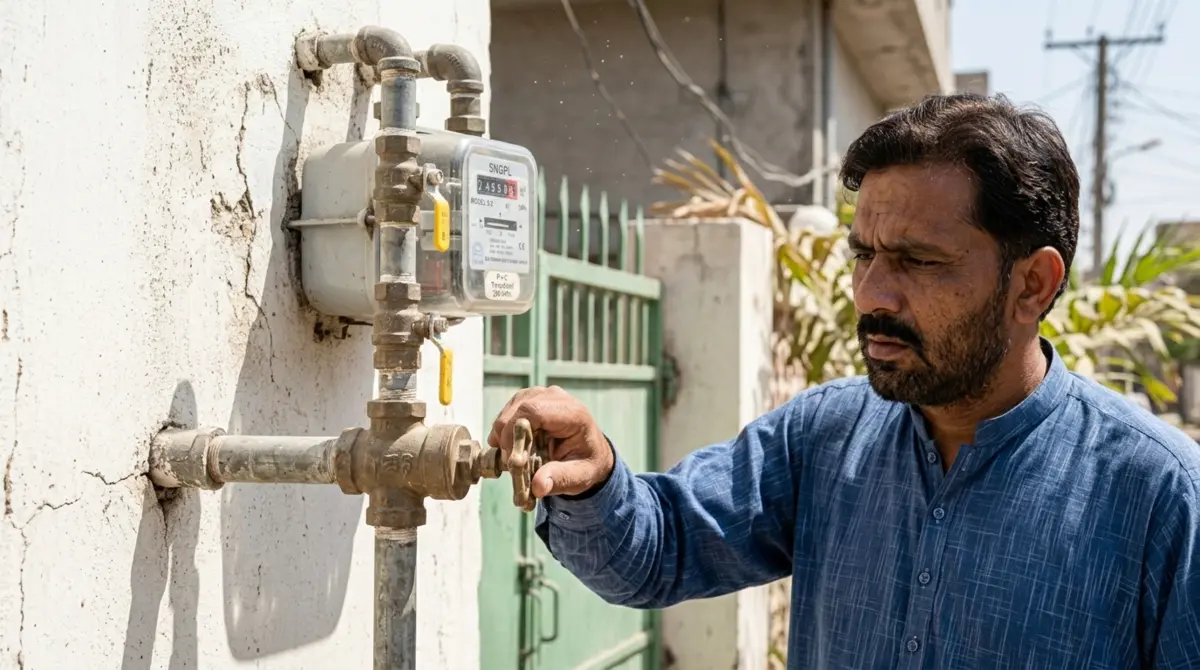
Low gas pressure is one of the most frustrating problems for households in Pakistan, especially during winter months when everyone needs gas for cooking and heating. Your stove barely lights, the water heater takes forever to warm up, and forget about running the gas heater when it’s freezing outside. If you’re in SNGPL areas (Punjab and KPK) or SSGC areas (Sindh and Balochistan), you’ve probably dealt with this headache multiple times.
The thing is, low gas pressure isn’t always the gas company’s fault, and it’s not always something they need to fix. Sometimes the problem is right in your home, and you can solve it yourself in under an hour. Other times, it’s a neighborhood-wide issue that needs SNGPL or SSGC intervention. Knowing the difference saves you days of waiting for a technician who might not even be needed.

What Low Gas Pressure Actually Means
Gas pressure is measured in inches of water column (WC) or millibars. Your appliances are designed to work at specific pressure levels. When pressure drops below normal, appliances can’t function properly—flames become weak, pilot lights won’t stay lit, and geysers struggle to heat water.
Normal gas pressure at your home should be:
- 7-11 inches WC (17-27 millibars) for residential connections
- Minimum 5 inches WC to keep appliances functioning
- Below 5 inches WC means serious pressure problems
You don’t need fancy equipment to know you have low pressure. The signs are pretty obvious once you know what to look for.
Signs You Have Low Gas Pressure
Before calling SNGPL or SSGC, make sure you actually have a pressure problem and not something else.
Clear signs of low gas pressure:
- Yellow or orange flames instead of blue: Healthy gas flames burn blue. Yellow or orange flames mean incomplete combustion due to low pressure or air mixture issues
- Gas stove won’t light or keeps going out: The flame is too weak to sustain itself
- Water heater takes 2-3x longer than normal: Or doesn’t heat water at all
- Gas heater barely produces warmth: Flame is there but insufficient for proper heating
- Hissing sound at burners is quiet or absent: Normal pressure creates a distinct hissing sound when gas flows
- Problem affects multiple appliances: If only one appliance has issues, it’s probably that appliance, not pressure
- Issues worsen during peak hours: Evenings (6-10 PM) when neighborhood usage is highest
“The easiest test is your stove. If all four burners light normally with strong blue flames, your pressure is probably fine. If they struggle to light and flames are weak, you have a pressure issue.” — SNGPL Technician, Lahore
SNGPL vs SSGC Coverage Areas
Before troubleshooting, know which company serves your area. SNGPL and SSGC have different systems, complaint procedures, and pressure management policies.
| Gas Company | Coverage Area | Major Cities |
|---|---|---|
| SNGPL | Punjab, Khyber Pakhtunkhwa, parts of Azad Kashmir | Lahore, Islamabad, Rawalpindi, Faisalabad, Multan, Peshawar, Gujranwala |
| SSGC | Sindh, Balochistan | Karachi, Hyderabad, Sukkur, Quetta, Larkana |
If you’re not sure which company serves you, check your gas bill on eBillPakistan. Enter your consumer number and it’ll show whether you’re an SNGPL or SSGC customer. This matters because the troubleshooting steps and complaint procedures differ slightly between the two companies.
Common Causes of Low Gas Pressure
Low pressure happens for different reasons. Some you can fix yourself, others need the gas company’s intervention.
Issues You Can Fix Yourself
1. Partially Closed Main Gas Valve
Sounds stupid, but it happens more than you’d think. Someone partially turns the main gas valve (usually near your meter) and forgets about it. Check that your main valve is fully open—the handle should be parallel to the pipe, not perpendicular.
2. Clogged or Dirty Burner Jets
Over time, dust, food particles, and debris clog the tiny holes in your stove or heater burners. This restricts gas flow and makes it seem like you have low pressure when really you just have dirty burners. Clean them with a thin wire or needle.
3. Faulty Gas Regulator
Every home has a gas regulator near the meter that controls pressure. These can malfunction, stick, or wear out over time. If the regulator is faulty, replacing it costs PKR 1,500-3,000 and solves the problem immediately.
4. Leaking Gas Pipes in Your Home
Even small leaks reduce pressure throughout your system. Check visible pipes for leaks using soapy water—bubbles indicate escaping gas. Get leaks fixed immediately for both pressure and safety reasons.
5. Undersized Internal Piping
Older homes sometimes have 1/2 inch gas pipes when they should have 3/4 inch or larger, especially if appliances were added later. Undersized pipes can’t deliver sufficient gas flow, creating artificial low pressure.
Issues That Need SNGPL/SSGC to Fix
1. Area-Wide Low Pressure
If everyone in your neighborhood has low pressure, it’s the main supply line. This happens when too many connections are added to a pipeline without upgrading infrastructure, or when supply is deliberately reduced during shortages.
2. Faulty Pressure Regulator at Gate Station
Gas flows from transmission lines through gate stations with pressure regulators before reaching neighborhoods. If these regulators malfunction, entire areas lose pressure.
3. Pipeline Damage or Blockage
Construction work, ground shifting, or corrosion can damage underground pipes. Severe damage can drop pressure significantly in affected zones.
4. Deliberate Load Management
During winter peaks or gas shortages, SNGPL and SSGC sometimes deliberately reduce pressure in certain areas to manage limited supply. This is technically against regulations but happens frequently.
5. New Connections Without Infrastructure Upgrade
Housing societies and new developments get gas connections, but the main supply line wasn’t upgraded to handle increased demand. During peak usage hours, everyone suffers low pressure.
Step-by-Step: How to Diagnose the Problem
Before calling the gas company or spending money on repairs, figure out whether the problem is in your home or outside.
Step 1: Test Multiple Appliances
Turn on all your gas appliances—stove, water heater, room heater. Do they all have weak flames? If only one appliance has issues, that appliance is the problem, not gas pressure. If everything is weak, move to Step 2.
Step 2: Check Your Main Gas Valve
Go to your gas meter. Find the main shut-off valve (usually before the meter or right after). Make absolutely sure it’s fully open—handle parallel to the pipe. If it was partially closed, open it fully and test your appliances again.
Step 3: Ask Your Neighbors
Knock on a few doors. Are they having the same problem? If yes, it’s an area-wide issue and you need to file a complaint with SNGPL or SSGC. If no, the problem is specific to your connection or internal system.
Step 4: Check Your Gas Regulator
The regulator is a metal box with pipes going in and out, usually near your meter. Is it making unusual sounds? Does it feel abnormally hot or cold? These indicate malfunction. Try gently tapping it—sometimes stuck regulators free up temporarily.
Step 5: Inspect Visible Pipes for Leaks
Mix soap and water, apply to pipe joints and connections. Bubbles mean gas is escaping, reducing pressure. Mark leak locations and call a plumber immediately.
Step 6: Test at Different Times
Check gas pressure early morning (5-6 AM) when neighborhood usage is low. If pressure is fine then but terrible at 7-9 PM, it’s peak-hour strain on the area supply, not your home system.
DIY Fixes You Can Try First
If the problem is in your home, try these fixes before calling anyone.
Clean All Burner Jets
- Turn off gas at the main valve
- Remove burner caps from your stove
- Use a thin wire, needle, or toothpick to clear each tiny hole in the burner
- Wipe away any grease or debris
- Reassemble and test
This simple cleaning solves low pressure issues about 30% of the time.
Replace Your Gas Regulator
If you suspect a faulty regulator, you can replace it yourself if you’re handy, or hire a plumber. Cost is PKR 1,500-3,000 for the part plus labor. Make sure you buy the right type—SNGPL and SSGC require different pressure ratings.
Check and Clean the Filter
Some gas meters have filters that catch debris from the pipeline. Over years, these can clog. If accessible, clean or replace the filter screen. Some SNGPL and SSGC meters don’t have accessible filters—don’t force anything.
“We once had a customer in Karachi complaining about low pressure for months. Turned out their teenage son had turned the main valve to half-open while playing around and nobody noticed. Five minutes to fix, months of frustration.” — SSGC Customer Service, Karachi

How to File a Complaint with SNGPL
If you’ve confirmed the problem is outside your home or you can’t fix it yourself, file an official complaint with SNGPL.
SNGPL Complaint Methods:
- Helpline: Call 1199 (toll-free, 24/7)
- Online: Visit sngpl.com.pk and use the complaint registration portal
- SMS: Send consumer number + complaint to SNGPL’s SMS service (check website for current number)
- In Person: Visit your nearest SNGPL regional office
- Mobile App: SNGPL has an app for complaint registration and tracking
Information you need ready:
- Your 17-digit consumer reference number (on your gas bill)
- Complete address
- Description of the problem (be specific: “Low gas pressure, all appliances affected, weak blue flames, problem worse in evenings”)
- How long you’ve had the problem
- Whether neighbors have the same issue
You can check your SNGPL bill and get your consumer number through eBillPakistan if you don’t have a paper bill handy. Just enter your details and it’ll show your current bill along with your reference number.
SNGPL is supposed to respond within 7 working days. Get a complaint reference number and follow up if you don’t hear back within a week.
How to File a Complaint with SSGC
The process for SSGC is similar but uses different channels.
SSGC Complaint Methods:
- Helpline: Call 1199 (same number as SNGPL, routes correctly based on your area)
- WhatsApp: SSGC has WhatsApp complaint service (check official website for number)
- Online Portal: Visit ssgc.com.pk for online complaint registration
- In Person: Visit SSGC regional customer care centers in Karachi, Hyderabad, or Quetta
- Email: Send complaint details to SSGC’s customer service email
Same as SNGPL, have your 17-digit consumer number ready. You can get this from your SSGC bill on eBillPakistan if needed.
SSGC’s official response time is also 7 working days, though in practice Karachi complaints often take longer due to high volume.
What Happens After You File a Complaint
Understanding the process helps manage expectations and know when to escalate.
| Timeline | What Happens |
|---|---|
| Day 1 | Complaint registered, reference number issued |
| Day 2-3 | Complaint routed to relevant regional office |
| Day 3-5 | Technical staff assigned to investigate |
| Day 5-7 | Site visit scheduled (they should call you first) |
| Day 7-10 | Issue diagnosed and fix attempted |
| Day 10-15 | Follow-up to confirm problem resolved |
Reality often diverges from this timeline. In high-demand areas or during winter peaks, complaints can take weeks or even months to resolve, especially if the issue requires infrastructure upgrades.
When and How to Escalate
If SNGPL or SSGC doesn’t resolve your problem within 30 days, or if you’re getting runaround treatment, escalate to higher authorities.
Escalation Path:
- Call back and reference your complaint number: Ask to speak with a supervisor, not just the call center agent
- Visit the regional office in person: Face-to-face complaints get faster attention than phone calls
- File complaint with OGRA: Oil and Gas Regulatory Authority is the government body overseeing SNGPL and SSGC. They have a consumer complaint portal
- Contact Pakistan Citizens Portal: Government complaint system where officials are required to respond within timeframes
- Social media pressure: Tag SNGPL or SSGC on Twitter with your complaint number. Public complaints get faster responses
OGRA complaints usually force action because gas companies face penalties for unresolved consumer issues. You can file at ogra.org.pk with your complaint history from SNGPL/SSGC.
Peak Hour vs All-Day Low Pressure
The timing of your low pressure problem tells you a lot about the cause and likelihood of getting it fixed.
Peak Hour Low Pressure (Evenings 6-10 PM):
- Caused by everyone in the area using gas simultaneously
- Indicates undersized infrastructure for current connections
- Hardest for gas companies to fix—requires pipeline upgrades costing millions
- Often goes unresolved for years in older neighborhoods
- Your best option: adjust usage to off-peak hours when possible
All-Day Low Pressure:
- Indicates a specific problem (faulty regulator, line damage, your home system issue)
- Easier and cheaper for gas companies to fix
- Should be resolved within 1-2 weeks if you push them
- More likely to get OGRA support if gas company ignores complaint
“Peak hour pressure problems in Lahore’s old city areas have existed for 10-15 years. SNGPL knows about them but can’t upgrade every pipeline simultaneously. They prioritize areas where pressure is dangerous, not just inconvenient.”
Winter vs Summer Pressure Differences
Gas pressure problems follow seasonal patterns that help diagnose causes.
Winter (November-February):
- Worst pressure problems nationwide
- Caused by massive heating demand plus winter gas shortages
- SNGPL and SSGC sometimes deliberately reduce pressure to stretch limited supply
- Industrial users get priority, residential users suffer
- Complaints spike but resolution rate drops—companies are overwhelmed
Summer (May-August):
- Generally better pressure as heating demand disappears
- If you have low pressure in summer, it’s likely a specific fixable problem
- Gas companies more responsive to complaints as workload is lighter
- Good time to get infrastructure issues addressed before next winter
If your pressure is fine in summer but terrible in winter, it’s almost certainly peak-demand overload, not a fixable equipment problem.
Temporary Solutions While Waiting for Fixes
You can’t always fix low pressure immediately, but you can work around it.
Cooking workarounds:
- Cook during off-peak hours (late night or early morning) when pressure is better
- Use pressure cookers which work better with low pressure than open pots
- Keep backup induction cooker or electric kettle for critical needs
- Prepare no-cook or cold meals when pressure is worst
Water heating workarounds:
- Heat water during better pressure hours and store in insulated containers
- Install electric backup geyser for emergencies
- Use immersion heaters as temporary solution
- Take showers when pressure improves rather than fighting weak geysers
Heating workarounds:
- Use gas heaters during better pressure times, electric heaters during low pressure hours
- Layer clothing and use blankets to reduce heating needs
- Heat smaller rooms that retain warmth better
- Close off unused rooms to concentrate available heating
When to Consider Alternative Solutions
If low pressure is chronic and SNGPL/SSGC can’t or won’t fix it, you might need to look at alternatives.
LPG Cylinder Backup:
Keep domestic LPG cylinder as backup for cooking during low pressure hours. Cost is PKR 3,500-4,000 per cylinder, lasts 20-30 days for average cooking. Not ideal as permanent solution but better than not being able to cook.
Electric Appliances:
Invest in electric kettle, induction cooker, or electric water heater as permanent backups. Higher electricity cost but guaranteed functionality regardless of gas pressure.
Pressure Booster Pump:
In extreme cases, some people install gas pressure booster pumps. These mechanically increase pressure in your home system. Cost is PKR 25,000-50,000. Not commonly used and some safety concerns, but works when nothing else does.
Community Pressure:
If your entire neighborhood or housing society suffers, organize collective complaints. SNGPL and SSGC respond faster to 50 complaints about the same issue than 50 individual unrelated complaints. Society management can file formal complaint on behalf of all residents.
Prevention: Maintaining Good Pressure Long-Term
Once pressure is fixed, keep it that way with basic maintenance.
- Service your gas system annually: Have a plumber check all connections, regulator, and valves before winter
- Clean burners monthly: Don’t let debris accumulate over months
- Check your gas bill regularly: Use eBillPakistan to monitor consumption patterns. Sudden spikes might indicate leaks affecting pressure
- Don’t ignore small leaks: That hissing sound or gas smell leads to bigger problems and pressure drops
- Upgrade old appliances: Modern gas appliances work better at varying pressures than old models
- Report neighborhood issues quickly: Don’t wait weeks hoping someone else complained. Be the first to report area-wide problems
Low gas pressure is annoying but usually fixable once you identify whether it’s your home system or the supply network. Start with the simple checks—valves, burners, neighbors—before assuming you need SNGPL or SSGC intervention. Half the time the problem is something you can fix yourself in an afternoon.
When you do need to file complaints, be persistent. The squeaky wheel gets greased—follow up on your complaint weekly until it’s resolved. Use eBillPakistan to keep your consumer number handy for all complaint interactions with SNGPL or SSGC.
And remember, peak hour pressure problems in older neighborhoods might never get fully fixed unless major infrastructure work happens. In those cases, adjusting your usage patterns and having backup cooking/heating options makes life much easier than fighting a battle you can’t win.
Quick reminder: Check your SNGPL or SSGC bill regularly on eBillPakistan not just for payment but to monitor consumption. Unusual patterns often indicate problems before they become obvious—catching issues early means easier fixes.

Farhan Shafique is a Pakistan-based researcher and content writer specializing in electricity billing systems and public utility services. He has spent years studying billing structures, tariff calculations, and consumer rights to help people better understand their monthly bills. Through detailed guides and step-by-step explanations, he aims to simplify complex utility processes for everyday users.