
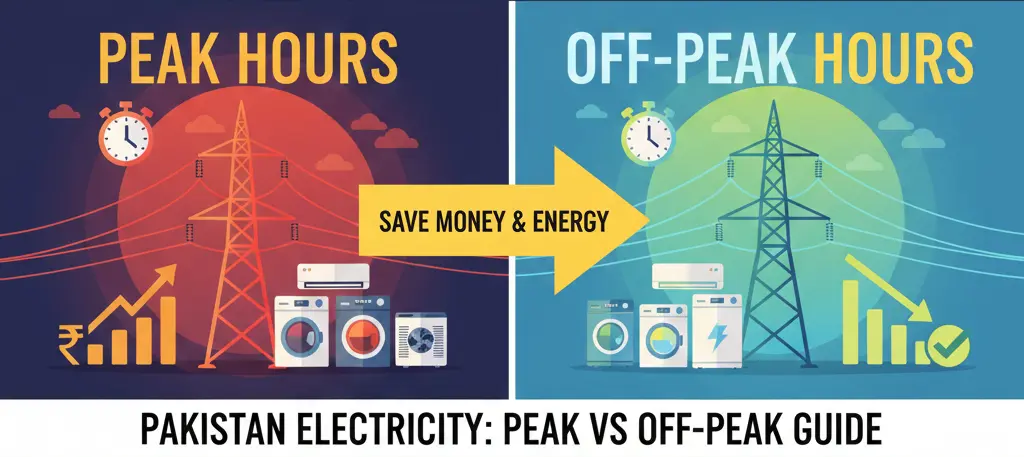
Pakistan’s electricity tariff system operates on a time-of-use pricing model that distinguishes between peak and off-peak hours. Understanding these differences can help consumers significantly reduce their electricity bills while contributing to grid stability.

What Are Peak and Off-Peak Hours?
Peak hours refer to the time periods when electricity demand is at its highest, while off-peak hours represent periods of lower consumption. The National Electric Power Regulatory Authority (NEPRA) has established this system to manage load distribution and encourage efficient energy use across the country.
Current Peak and Off-Peak Hour Schedule in Pakistan
| Time Period | Hours | Season |
|---|---|---|
| Peak Hours (Summer) | 7:00 PM to 11:00 PM | May to September |
| Peak Hours (Winter) | 6:00 PM to 10:00 PM | October to April |
| Off-Peak Hours | 11:00 PM to 7:00 AM | Year-round |
| Standard Hours | Remaining daytime hours | Year-round |
Key Differences Between Peak and Off-Peak Electricity Rates
The primary distinction between these time periods lies in the electricity pricing structure implemented by distribution companies across Pakistan.
Electricity Tariff Variations:
- Peak hour rates can be 50-100% higher than off-peak rates
- Off-peak electricity costs approximately 8-12 rupees per unit
- Peak hour charges range from 15-24 rupees per unit
- Standard hours fall somewhere in between these extremes
“Time-of-use tariffs are designed to incentivize consumers to shift their high-power consumption activities to off-peak hours, thereby reducing pressure on the national grid during peak demand periods.” — NEPRA Guidelines
Why Do Peak Hours Cost More?
The higher rates during peak hours reflect several operational and economic factors in Pakistan’s energy sector.
Reasons for Premium Peak Hour Pricing:
- Increased demand requires activation of expensive thermal power plants
- Grid infrastructure faces maximum stress during these hours
- Additional generation capacity must be brought online
- Fuel costs increase when more power plants operate simultaneously
- Distribution losses are higher during maximum load periods
Understanding Off-Peak Hour Benefits
Off-peak hours represent an opportunity for cost-conscious consumers to optimize their electricity consumption patterns.
Advantages of Off-Peak Electricity Usage:
- Significantly lower per-unit electricity costs
- Reduced strain on national grid infrastructure
- More stable voltage supply with fewer fluctuations
- Lower risk of load shedding or power interruptions
- Environmental benefits from reduced peak demand
Practical Tips for Utilizing Off-Peak Hours
| Appliance/Activity | Recommended Action | Potential Savings |
|---|---|---|
| Washing Machine | Run loads after 11:00 PM | 30-40% |
| Dishwasher | Set delay timer for night hours | 35-45% |
| Electric Water Heater | Heat water during off-peak times | 40-50% |
| EV Charging | Charge vehicles overnight | 50-60% |
| Air Conditioning | Pre-cool rooms before peak hours | 20-30% |
Regional Variations Across Pakistan
Different electricity distribution companies in Pakistan may implement slightly varying peak and off-peak schedules based on regional demand patterns.
Major Distribution Companies:
- K-Electric (Karachi) – Has its own time-of-use structure
- LESCO (Lahore) – Follows NEPRA standard timings
- IESCO (Islamabad) – Implements federal guidelines
- PESCO (Peshawar) – Adheres to northern region schedules
- MEPCO (Multan) – Follows southern Punjab patterns
- GEPCO (Gujranwala) – Standard NEPRA timings
- FESCO (Faisalabad) – Central Punjab schedule
“Consumers can reduce their monthly electricity bills by up to 40% simply by shifting their heavy appliance usage to off-peak hours. This small behavioral change makes a significant financial difference.” — Energy Conservation Expert
Impact on Industrial and Commercial Consumers
The peak and off-peak system affects different consumer categories in varying ways across Pakistan’s commercial landscape.
Industrial Sector Implications:
- Manufacturing units often operate 24/7 shifts to utilize off-peak rates
- Three-phase industrial connections see more dramatic rate differences
- Many factories schedule energy-intensive processes during night hours
- Cold storage facilities optimize cooling cycles around tariff structures
- Textile mills and steel plants adjust production schedules accordingly
Commercial Considerations:
- Shopping malls and retail outlets face higher operational costs during evening peak hours
- Restaurants and hospitality businesses experience maximum electricity expenses
- Office buildings can implement energy management systems to reduce peak consumption
- Commercial consumers may invest in solar panels or backup systems
Time-of-Use Metering in Pakistan
The implementation of smart meters across Pakistan has made time-based tariff tracking more accurate and transparent for consumers.
Smart Meter Features:
- Real-time tracking of peak and off-peak consumption
- Separate unit counters for different time periods
- Digital displays showing current tariff rate
- Remote meter reading capabilities
- Detailed consumption reports available online
Seasonal Variations in Electricity Demand
Pakistan experiences significant seasonal fluctuations in electricity demand that influence the peak hour pricing structure.
Summer Peak Demand (May-September)
During summer months, electricity consumption reaches its annual maximum due to air conditioning usage.
Summer Characteristics:
- Peak hours extend slightly longer (7:00 PM – 11:00 PM)
- Residential consumption increases by 60-80%
- Grid capacity often approaches its maximum limit
- Load shedding risks are highest during evening peaks
- Electricity prices generally increase across all categories
Winter Consumption Patterns (October-April)
Winter months see reduced overall consumption but different usage patterns, particularly with heating appliances.
Winter Characteristics:
- Peak hours shift earlier (6:00 PM – 10:00 PM)
- Heating appliances create evening demand spikes
- Overall grid pressure is lower than summer
- Off-peak hours offer greater savings potential
- Natural gas shortages may increase electric heater usage
How to Calculate Your Peak vs Off-Peak Consumption
Understanding your electricity bill breakdown helps identify savings opportunities through consumption pattern changes.
Calculation Steps:
- Check your monthly electricity bill for unit consumption details
- Identify separately listed peak and off-peak units if available
- Multiply peak units by higher tariff rate
- Multiply off-peak units by lower tariff rate
- Compare total costs to identify shifting opportunities
| Consumption Category | Monthly Units | Rate (PKR/Unit) | Cost (PKR) |
|---|---|---|---|
| Peak Hours | 200 units | 20 | 4,000 |
| Off-Peak Hours | 150 units | 10 | 1,500 |
| Standard Hours | 150 units | 15 | 2,250 |
| Total | 500 units | — | 7,750 |
Government Policies and Future Outlook
Pakistan’s energy sector continues to evolve with new policies aimed at improving efficiency and reducing costs for consumers.
Recent Policy Developments:
- Introduction of net metering for solar panel users
- Gradual rollout of smart meters nationwide
- Time-of-use tariff refinements based on consumption data
- Renewable energy integration to reduce peak hour costs
- Incentive programs for off-peak industrial operations
“The shift toward time-differentiated pricing is part of Pakistan’s broader energy sector reform aimed at creating a more sustainable and economically viable power distribution system.” — Ministry of Energy
Common Misconceptions About Peak and Off-Peak Hours
Several myths and misunderstandings exist regarding Pakistan’s time-of-use electricity tariff system.
Debunked Misconceptions:
- Myth: Off-peak electricity quality is lower – Reality: Power quality remains consistent regardless of time
- Myth: Only industrial consumers benefit from time-based tariffs – Reality: Residential users can save significantly too
- Myth: All appliances cost the same to run at any time – Reality: High-wattage appliances create dramatic cost differences
- Myth: Peak hours are the same year-round – Reality: Timings shift between summer and winter seasons
Practical Energy Management Strategies
Implementing smart consumption habits can lead to substantial savings on monthly electricity bills.
Effective Strategies:
- Program appliances with timers to run during off-peak hours
- Pre-cool or pre-heat your home before peak hours begin
- Use natural lighting during daytime to reduce evening electricity needs
- Invest in energy-efficient appliances with lower overall consumption
- Consider battery storage systems to shift consumption patterns
- Monitor your consumption through utility company apps or portals
- Educate family members about peak hour awareness
Conclusion
The distinction between peak and off-peak hours in Pakistan represents more than just a pricing mechanism. It reflects the country’s approach to managing electricity demand, reducing infrastructure strain, and encouraging energy conservation. By understanding these differences and adjusting consumption patterns accordingly, Pakistani households and businesses can achieve significant cost savings while contributing to national grid stability.
Whether you’re a residential consumer looking to reduce monthly bills or a business owner optimizing operational costs, leveraging off-peak hours for energy-intensive activities remains one of the most effective strategies for managing electricity expenses in Pakistan’s current tariff structure.
Note: Electricity tariffs and peak hour timings are subject to change based on NEPRA notifications and distribution company policies. Consumers should verify current rates and timings with their respective electricity providers.

Farhan Shafique is a Pakistan-based researcher and content writer specializing in electricity billing systems and public utility services. He has spent years studying billing structures, tariff calculations, and consumer rights to help people better understand their monthly bills. Through detailed guides and step-by-step explanations, he aims to simplify complex utility processes for everyday users.